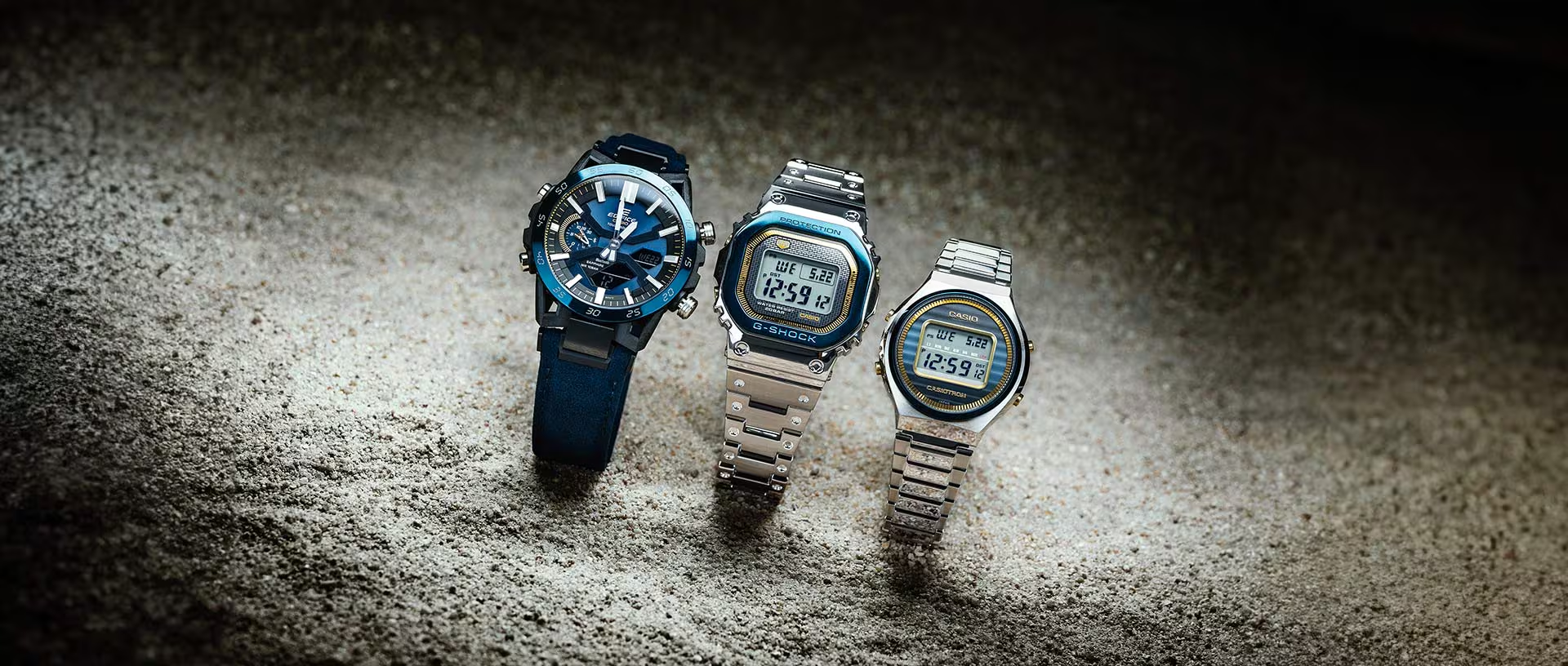
Casio Computer Co., Ltd., often just called Casio, is a Japanese electronics company that has become a household name around the world. From calculators to digital watches to musical instruments, Casio has continuously reinvented itself and delivered accessible, useful technology for decades. In 2025, Casio remains a major player—innovating in its core businesses while navigating a changing global market.
The Origins of Casio
Casio’s story begins in the aftermath of World War II. In April 1946, Tadao Kashio founded a small workshop called Kashio Seisakujo in Tokyo, Japan. Initially, the company made a curious product: the yubiwa pipe, a finger ring that held a cigarette and freed the wearer’s hands.
Tadao and his younger brothers Toshio, Kazuo and Yukio used profits from that early invention to fund their real passion—electronics. By the mid-1950s, the brothers developed a prototype of an all-electric calculator, and in 1957, Casio released its first commercially successful model: the 14-A, the world’s first compact, all-electric calculator. That same year, Casio was formally incorporated as Casio Computer Co., Ltd.
Casio’s Rise Through Innovation
Calculators: A Core Identity
Casio made its name in the calculator market. In the 1960s and 1970s, it released a series of compact calculators—models that were dramatically smaller and more affordable than previous office machines. Its Casio Mini, launched in the early ’70s, was revolutionary: a personal calculator for home use, made small and accessible.
Later, Casio continued pushing the boundaries with scientific and graphing calculators. The fx-7000G, introduced in 1985, is particularly notable: it was the world’s first graphing calculator available to the public. Over time, Casio has sold hundreds of millions of calculators, cementing its position in classrooms and offices around the world.
Watches & Timepieces
Watches are perhaps what many people think of when they hear “Casio.” The company entered the watch market in the 1970s, applying its electronics expertise to quartz technology.
One of Casio’s most legendary lines is G-Shock, introduced in 1983. Designed to be incredibly durable—shock-resistant, water-resistant, and built to last—G-Shock watches became hugely popular among athletes, adventurers, and fans of rugged design.
Another classic is the CA-53W calculator watch, which pairs a digital calculator keypad with a time display. This piece became part of pop culture, appearing in Back to the Future II. Casio also brings retro designs back: for example, a new edition inspired by 1980s sci-fi aesthetics.
Musical Instruments & Sound
Casio didn’t stop at calculators and watches. An important part of its business is electronic musical instruments. Casio is widely known for its keyboards, synthesizers, and portable digital pianos. By making affordable and creative musical tools, Casio has helped countless beginners and professionals alike explore music production.
Other Electronic Products
Over the years, Casio’s product portfolio has included a wide range of electronic devices: label printers, digital cameras (the Exilim series), electronic dictionaries, cash registers, and more. While Casio has pulled back from some older product lines, its diversification has been a strength in adapting to changing tech demands.
Casio’s Corporate Vision and Strategy
Casio’s corporate philosophy centers on “creating new value through transformation and innovation.” Its medium-term management plan (2023–2025) emphasizes innovation across traditional areas like timepieces and education, while also pushing into new growth businesses such as sound and digital products.
In 2025, Casio has 8,800+ employees and maintains a strong global presence. Its long-term mission involves sustainability, corporate responsibility, and balancing tradition with future-facing electronics.
Innovation and Legacy Products
Calculators That Revolutionized the World
Casio’s calculator legacy is profound. Starting with the 14-A, the company continued innovating—moving from relay-based machines to integrated circuits, from basic calculators to graphing models. The SL-800, released later, was an ultra-thin calculator only 0.8 mm thick—a marvel in miniaturization.
The Game & Calculator Watches
One of Casio’s more playful legacies is its video game watches. In the early 1980s, Casio released watches that doubled as simple portable games—a unique fusion of utility and entertainment.
Today, retro Casio watches are highly sought by collectors. Their vintage designs, low price points, and “nerd-chic” appeal make them more than just devices—they’re cultural artifacts.
Challenges & Criticisms
Casio, while beloved, is not without its critics. Some longtime fans argue that the company’s innovation has slowed:
-
On platforms like Reddit, users discuss how Casio today releases many throwback models but rarely introduces truly new, boundary-pushing tech.
-
There are also common complaints about counterfeit Casio watches, which undermine brand trust.
-
As smartwatches dominate, some wonder how Casio will stay relevant beyond its established niche of durable, affordable electronics.
Despite these challenges, Casio’s brand loyalty remains strong. Enthusiasts describe Casio as “god-tier” for its value, durability, and the nostalgic resonance of its classic models.
Casio Today: Balancing Heritage & Innovation
In 2025, Casio continues to straddle its technological heritage and future ambitions:
-
Timepiece Business: Still a core focus. Casio continues to develop G-Shock models, stylish retro digital watches, and newer connected watches.
-
Education Business: With calculators being crucial in classrooms globally, Casio remains a go-to brand for students.
-
Sound / Musical Instruments: Casio’s keyboard and digital instrument business is part of its core, contributing to its creative legacy.
-
Sustainable Vision: Casio emphasizes corporate responsibility, efficient manufacturing, and innovation that doesn’t just chase trends but builds real value.
The 2025 restructure announced by Casio highlights this: the company is reorganizing to better integrate its education, timepiece, sound, and new business segments.
Why Casio Still Matters
-
Accessibility: Casio’s products are often affordable without compromising quality. That’s part of why the brand is so loved.
-
Reliability & Durability: Products like G-Shock are known for toughness—users know Casio watches can take a beating.
-
Innovation Rooted in Utility: Casio’s inventions often solve real problems (e.g., compact calculators, durable watches) rather than chasing purely cosmetic trends.
-
Cultural Icon: From 80s game watches to scientific calculators, Casio has become ingrained in the tech nostalgia of multiple generations.
-
Global Reach: Casio’s presence in education, personal tech, and instruments ensures it remains a relevant global brand.
Looking Ahead: The Future of Casio
What might the future hold for Casio?
-
Smart-Connected Watches: As wearable tech evolves, Casio could lean more into hybrid watches that merge analog design with digital smart features.
-
Sustainable Products: With growing environmental concerns, Casio has an opportunity to innovate in eco-friendly manufacturing or long-lifecycle electronics.
-
Education Technology: Beyond calculators, Casio could expand into educational apps, digital learning tools, or AI-enabled study devices.
-
Retro Resurgence: Casio’s retro models (like calculator watches) continue to appeal to collectors and younger audiences; future product drops could lean into that nostalgia.
-
New Market Segments: Casio’s restructuring suggests it may enter “new businesses”—potentially combining its electronics expertise with emerging fields in IoT, AI, or creative tech.
Conclusion
Casio is much more than a legacy electronics company. From its humble beginnings post-World War II to its role today as a multifaceted innovator, Casio has built a lasting brand by making technology practical, durable, and accessible. Whether you’re using a Casio calculator in a classroom, wearing a G-Shock as a reliable daily watch, or playing a melody on a Casio keyboard, the brand is woven into countless lives.
At its heart, Casio continues to uphold a vision of creating new value through innovation. That guiding philosophy, first articulated by the Kashio brothers, remains deeply embedded in its modern strategy. As the world changes, Casio’s challenge — and opportunity — lies in preserving its heritage while pushing boldly into new technological frontiers.